


- 2.7k Views
- 7 Min Read
- (0) Comment
Nestled within the core of the Eastern Himalayas, Bhutan is widely recognized for its Gross National Happiness, breathtaking landscapes, and profound Buddhist heritage. Among its numerous spiritual landmarks, Bhutan Buddha temple (Buddha Dordenma), often referred to as Buddha Point, emerges as an ideal symbol of religion and peace. Located on elevated land within Kuensel Phodrang Nature Park, it is a 15 to 20-minute drive from the town center, approximately 6 km (3.7 miles) away.

Moreover, it offers breathtaking landscapes and an atmosphere of tranquility to all those who choose to explore this esteemed site. For those who enjoy hiking, there are trails within Kuensel Phodrang Nature Park that lead to Bhutan Buddha temple ( Buddha Point). The statue is situated within this nature park, which covers an area of 943 acres. The park is home to various species of flora and fauna, thus serving as a green lung for the city of Thimphu.
The Importance of Buddha Point
Bhutan is frequently termed the “Last Shangri-La” due to its well-preserved natural glory and spiritual legacy. In particular, Buddhism occupies an essential position within Bhutanese culture, influencing everyday life and governmental frameworks. The Buddha Dordenma statue i.e. Bhutan Buddha Temple, reaching a remarkable height of 169 feet, stands as one of the most substantial Buddha statues globally.

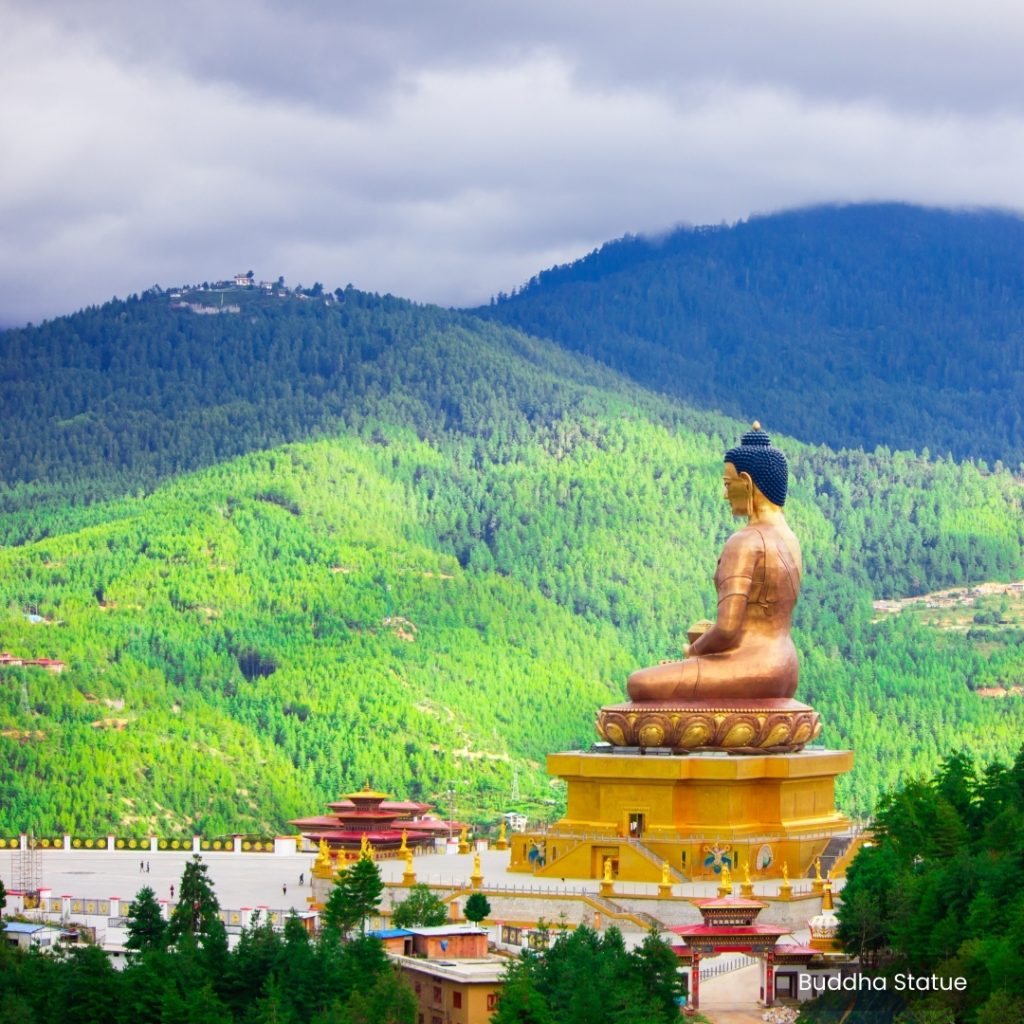
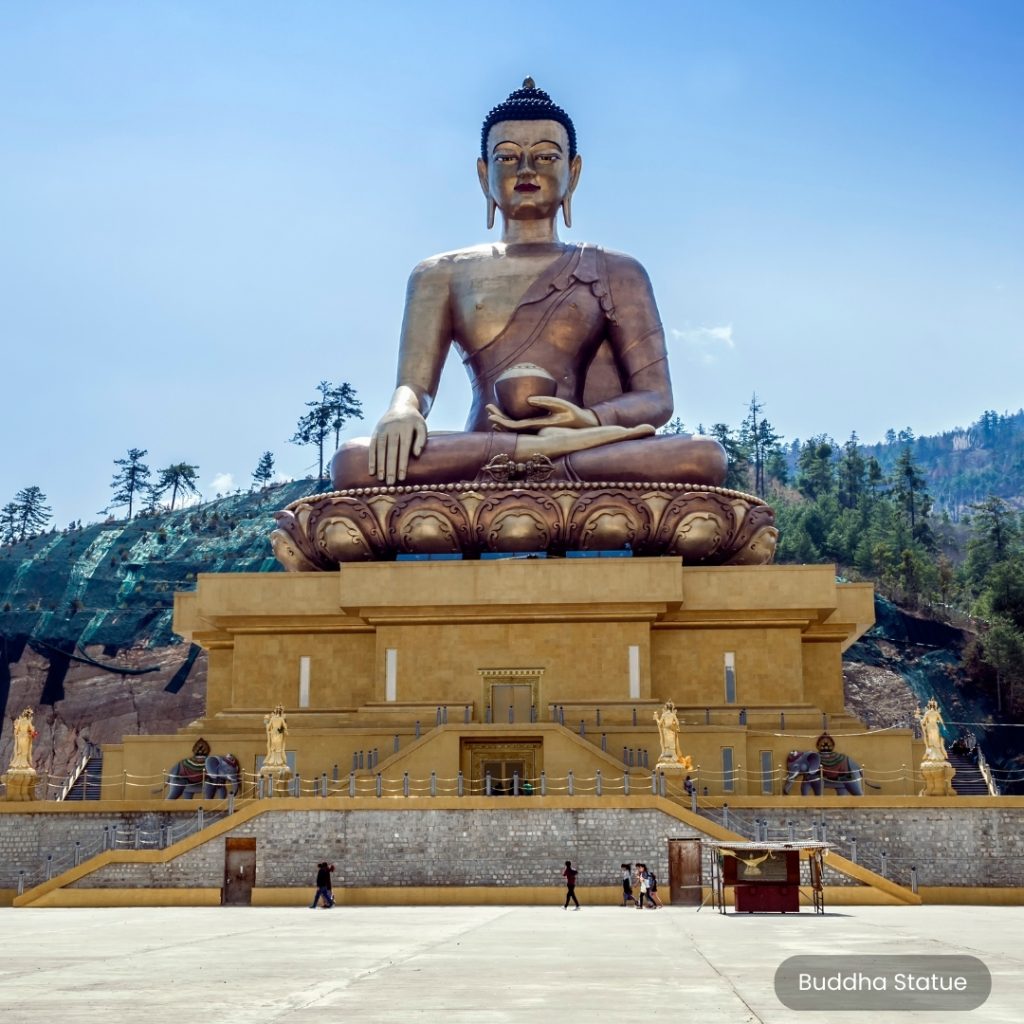
Thus, it serves as a testament to Bhutan’s unwavering commitment to Buddhism. The construction of the statue honored the 60th anniversary of the Fourth King of Bhutan, Jigme Singye Wangchuck. It contains over 125,000 smaller Buddha statues, thereby establishing it as a revered pilgrimage destination.
Furthermore, Bhutan Buddha temple (Buddha Point) exceeds the designation of a mere religious site; it embodies Bhutan’s ambitions for peace and prosperity. The site is believed to realize a historical prophecy regarding a monumental Buddha statue. According to this prophecy, the statue would bestow blessings upon the entirety of the world. Consequently, for the Bhutanese population, a visit to Buddha Point constitutes an act of devotion. It serves as a means to reconnect with their spiritual heritage and to seek blessings for themselves and their kin.
Architectural and Creative Excellence
The Buddha Dordenma statue holds significance not solely for its spiritual implications but also for its architectural and creative magnificence. The statue is constructed from bronze and adorned in gold, glowing dazzlingly under sunlight. As a result, it stands as a symbol of hope and peace. The elaborate craftsmanship involved in the creation of the statue exemplifies Bhutanese creativity and their commitment to safeguarding their cultural legacy.
Moreover, the interior of the statue is equally remarkable. Numerous meditation halls facilitate devotees in engaging in contemplation and prayer. Additionally, the smaller Buddha statues housed within the main statue is also crafted with careful attention to detail. Each piece is a work of art that contributes to the sacred environment of the site. Consequently, Buddha Point’s design combines traditional Bhutanese architecture with modern engineering, ensuring durability and inspiring future generations.
The Spiritual Experience at Buddha Point
For many visitors, the experience at Buddha Point surpasses the mere aesthetic appeal of the statue. The site possesses a deep spiritual essence, making it an optimal venue for reflection and meditation. Furthermore, the peaceful ambiance of Kuensel Phodrang Nature Park enhances this spiritual environment. It provides a calm space for visitors to disengage from the outside world and focus on their inner journey.
Buddha Point is, therefore, a popular site for both local residents and foreign travelers who seek to immerse themselves in Bhutan’s unique spiritual traditions. Common practices at this location include circumambulating the statue, reciting prayers, and lighting butter lamps. Each of these rituals serves as a means of establishing a connection with the divine. For many, a visit to Buddha Point is a life-altering experience, bestowing a sense of peace and renewed purpose.
The Role of Buddha Point in Promoting Tourism in Bhutan
In recent years, Buddha Point has gradually emerged as one of the most sought-after tourist attractions in Bhutan. Consequently, it now attracts visitors from various corners of the globe. Moreover, its closeness to Thimphu, the capital city, facilitates easy access for tourists. Additionally, the breathtaking views of the Thimphu Valley render it an indispensable destination. Furthermore, the site has been highlighted as part of Bhutan’s comprehensive tourism strategy, which underscores sustainable and low-impact tourism.
Bhutan’s approach to tourism is distinctive, as it prioritizes the preservation of the nation’s cultural and natural heritage while simultaneously permitting visitors to appreciate its beauty and spirituality. In particular, the government’s policy of “High Value, Low Impact” tourism guarantees that tourism does not overburden the nation’s resources or disrupt its traditional way of life. As a result, Buddha Point occupies a pivotal role in this strategy, symbolizing Bhutan’s dedication to maintaining its cultural identity while graciously welcoming visitors.
For tourists, a visit to Buddha Point provides a unique insight into Bhutan’s rich spiritual heritage. It also offers an opportunity to experience the renowned hospitality of the country. Furthermore, the site is frequently included in cultural tours that guide visitors to other significant religious landmarks, such as the Tiger’s Nest Monastery (Paro Taktsang) and Punakha Dzong. Ultimately, this comprehensive approach to tourism enables visitors to immerse themselves in Bhutanese culture and facilitates a deeper understanding of the country’s unique lifestyle.
Environmental Conservation and Buddha Point
Buddha Point is not just a spiritual and cultural symbol. It also shows Bhutan’s dedication to environmental conservation. The statue is located within Kuensel Phodrang Nature Park, a protected area that is home to many types of plants and animals. This park represents Bhutan’s efforts to balance development with nature preservation. This balance is a key part of Bhutan’s Gross National Happiness philosophy. Furthermore, the construction of the Buddha Dordenma statue focused on reducing its impact on the natural environment.
The site maintains a strong commitment to sustainable practices. The site encourages visitors to respect the natural surroundings and follow the Leave No Trace principles. Additionally, the park’s well-kept paths and clean environment make it a popular spot for nature lovers. They can enjoy Bhutan’s beautiful landscapes while visiting this spiritual site.
In addition, Buddha Point’s role in raising environmental awareness aligns with Bhutan’s broader efforts to tackle climate change and protect natural resources. As a carbon-negative country, Bhutan serves as a global model for sustainable development. Locations like Buddha Point support this reputation by attracting visitors who are mindful of their environmental impact.
The Future of Buddha Point as a Cultural and Spiritual Hub
As Bhutan moves toward modernization, preserving its cultural and spiritual heritage becomes even more important. Buddha Point, with its blend of ancient traditions and modern design, shows how Bhutan honors its past while looking to the future. This place is expected to remain a key destination for both locals and tourists. It will continue to be a center of culture and spirituality for future generations.
Moreover, the Bhutanese government sees the potential of Buddha Point as a hub for cultural exchange and spiritual learning. Plans are underway to enhance the site further. These plans include adding facilities for meditation retreats, cultural events, and educational programs. Such improvements will ensure that Buddha Point stays a place of inspiration and reflection for people from all backgrounds.
Conclusion
In summary, Buddha Point is more than just a tourist attraction; it is a symbol of Bhutan’s deep spiritual, cultural, and environmental values. The statue stands as a testament to Bhutan’s dedication to Buddhism, peace, and environmental conservation. Its location within Kuensel Phodrang Nature Park further emphasizes Bhutan’s commitment to balancing development with nature preservation.
Moreover, the site’s architectural beauty and spiritual significance offer visitors a profound experience, combining traditional Bhutanese artistry with modern engineering. This unique blend not only attracts tourists but also allows them to immerse themselves in Bhutan’s rich heritage and stunning landscapes.
As Bhutan continues to modernize, preserving its cultural and spiritual heritage will remain crucial. Buddha Point will continue to play a key role in this effort. The planned enhancements and sustainable practices will ensure that it remains a significant destination for future generations.
Overall, whether you are seeking spiritual enlightenment or simply wish to enjoy Bhutan’s natural beauty, a visit to Buddha Point promises an unforgettable and meaningful experience.


Leave a comment:
You must be logged in to post a comment.